Recently, YIN Jingwei, President of Harbin Engineering University (HEU), led a delegation to the Higher Education Press, the China Academy of Industrial Internet, and the China Electronics Standardization Institute for targeted discussions. The visits aimed to precisely align with cutting-edge industry resources and deepen multi-field strategic cooperation between the university and enterprises.
During the visit to the Higher Education Press, both sides held discussions focused on the publication of high-level textbooks for the university’s distinctive disciplines. WANG Weiquan, Editor-in-Chief of the Higher Education Press, attended the symposium.
YIN Jingwei stated that the Higher Education Press, as the national team and main force in China’s educational publishing sector, has made significant contributions to educational reform and the cultivation of innovative talent. HEU has long maintained a cooperative relationship with the Press in textbook development, yielding a series of achievements. He expressed hope that both sides would continue to deepen their strategic synergy, closely aligning with the needs of national higher education development and the construction of distinctive disciplines. He called for enhanced cooperation in areas such as upgrading specialized textbooks and AI empowerment, with the joint goal of creating a series of digital textbooks tailored to HEU’s strengths in shipbuilding, ocean engineering, and nuclear technology.
WANG Weiquan remarked that HEU is a vital base for talent cultivation and scientific research in the domains of shipbuilding industry, marine equipment, ocean exploration, and nuclear energy application. Noting the solid foundation of cooperation between the Press and HEU, he expressed hope that both parties would build on the university’s distinctive strengths in shipbuilding, ocean engineering, and nuclear technology to further develop high-level, systematic specialized textbooks. He also highlighted the potential for jointly developing premium textbooks and digital teaching resources aligned with the development of modern marine equipment.
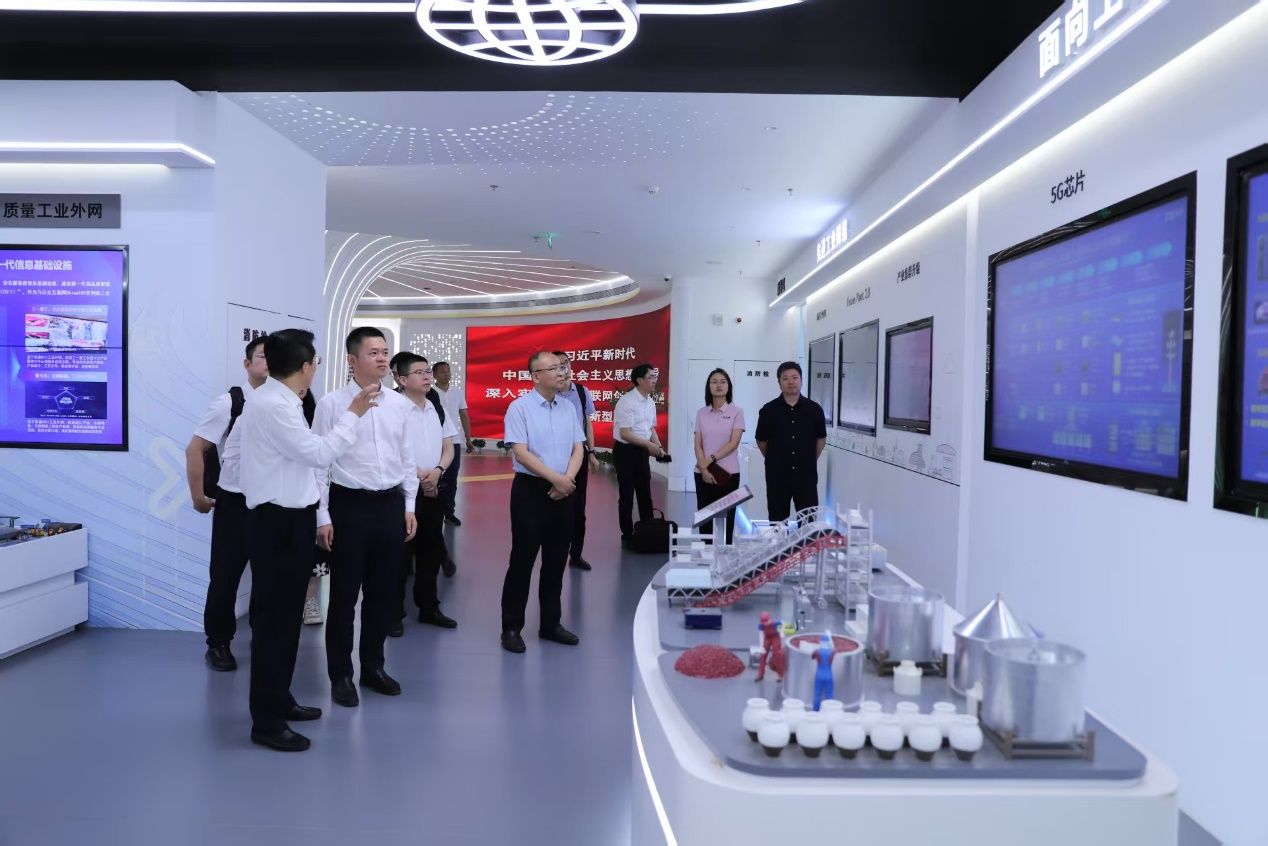
At the China Academy of Industrial Internet, both sides held in-depth discussions on the prospects of industrial internet cooperation in the field of shipbuilding and ocean engineering. LU Chuncong, President of the Academy, attended the symposium.
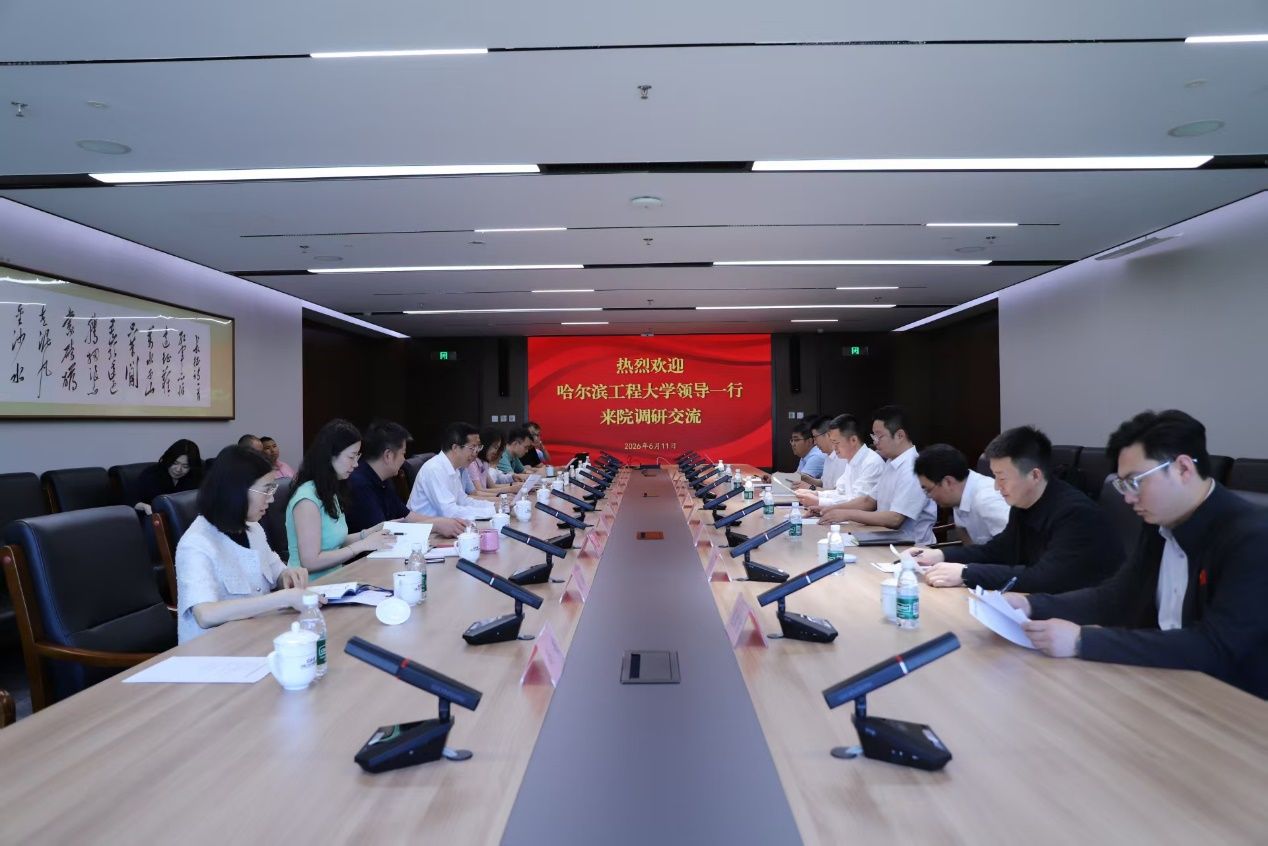
YIN Jingwei remarked that HEU and the China Academy of Industrial Internet have established a solid foundation for cooperation in the shipbuilding industrial internet. He expressed hope that both sides would further join forces in areas such as industrial internet security, digital twins, and industrial software. This includes jointly formulating industry standards and drafting guidelines, as well as applying together for key national R&D programs and major projects funded by the National Natural Science Foundation of China, thereby contributing to the advancement of new industrialization and national development.
LU Chuncong stated that HEU boasts strong scientific research capabilities in the shipbuilding sector and has made outstanding contributions to the development of the industry. He expressed hope that both parties would strengthen their cooperation by leveraging the university’s distinctive disciplinary strengths and the Academy’s technological advantages in the industrial internet. The goal is to extend industrial internet technologies to the shipbuilding industry, thereby better supporting its high-quality development.
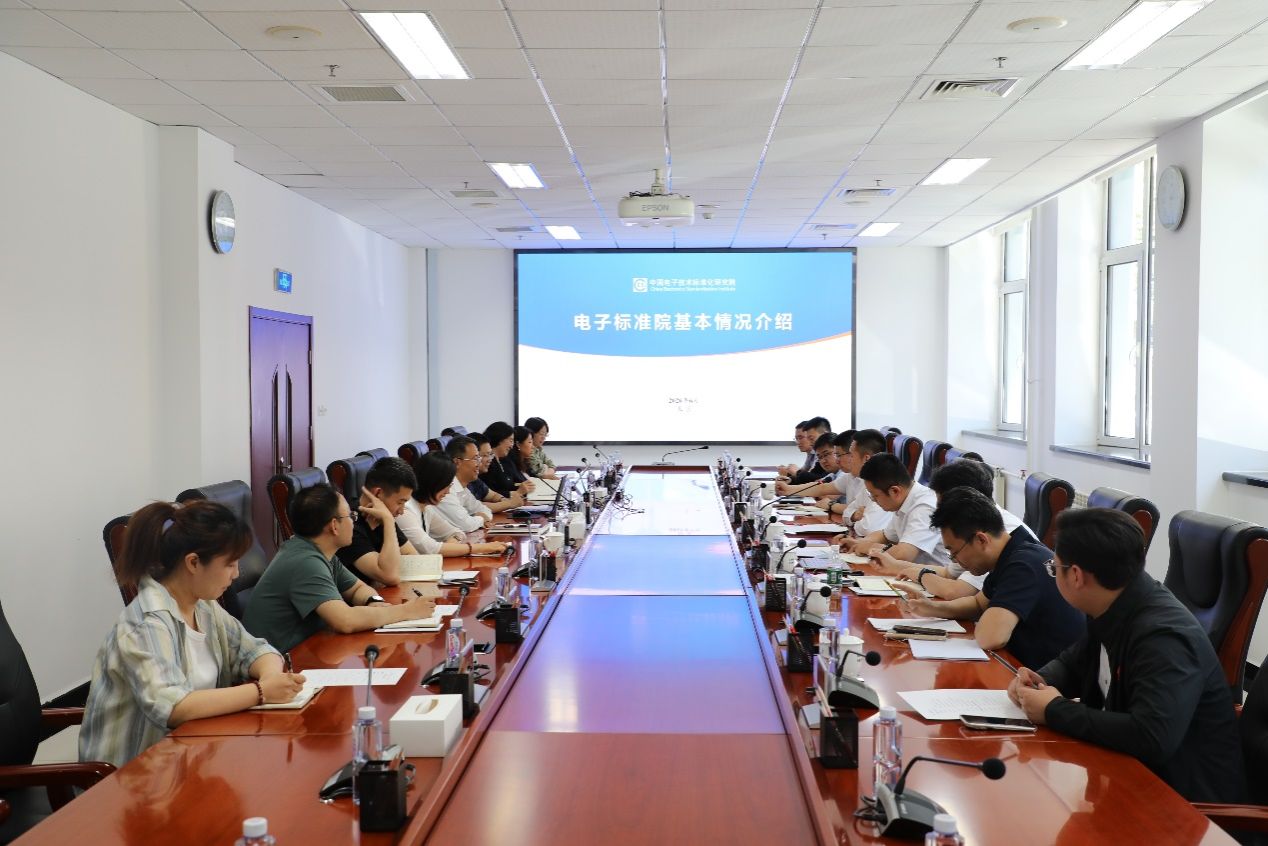
At the China Electronics Standardization Institute (CESI), both sides engaged in in-depth discussions on relevant domestic and international technologies and standards in fields such as integrated circuits, artificial intelligence, the Internet of Things (IoT), and industrial software. LIU Xiangang, Vice President of the Fourth Electronics Research Institute of China, attended the symposium.
YIN Jingwei stated that HEU has profound research expertise in the fields of marine information and unmanned equipment, and has maintained long-term cooperation with CESI in areas such as high-quality manufacturing development and the open-source ecosystem for industrial software. He expressed hope that both sides would further strengthen their cooperation in integrated circuits, unmanned equipment, and IoT, focusing on standard formulation, intelligent evaluation, and laboratory development, to jointly build an innovation ecosystem with deep integration of industry, academia, research, and application.
LIU Xiangang noted that, as a professional institution dedicated to standardization research in industry and electronic information technology, CESI will fully leverage its strengths in standard development and participation in domestic and international technical organizations. CESI will engage in deep cooperation with HEU, using high standards to support the development of high-tech industries and jointly contribute to national development.
These research visits and exchanges have further built a bridge for collaborative cooperation between the university and national-level industry platforms, opening up channels to connect discipline development with industry growth, and scientific innovation with industrial application. In the future, the university will continue to deepen industry-university-research cooperation, focusing on its distinctive strengths and integrating high-quality resources. This will drive comprehensive improvements in quality and efficiency across textbook development, technological breakthroughs, standard R&D, and talent cultivation, thereby supporting the university’s high-quality development.