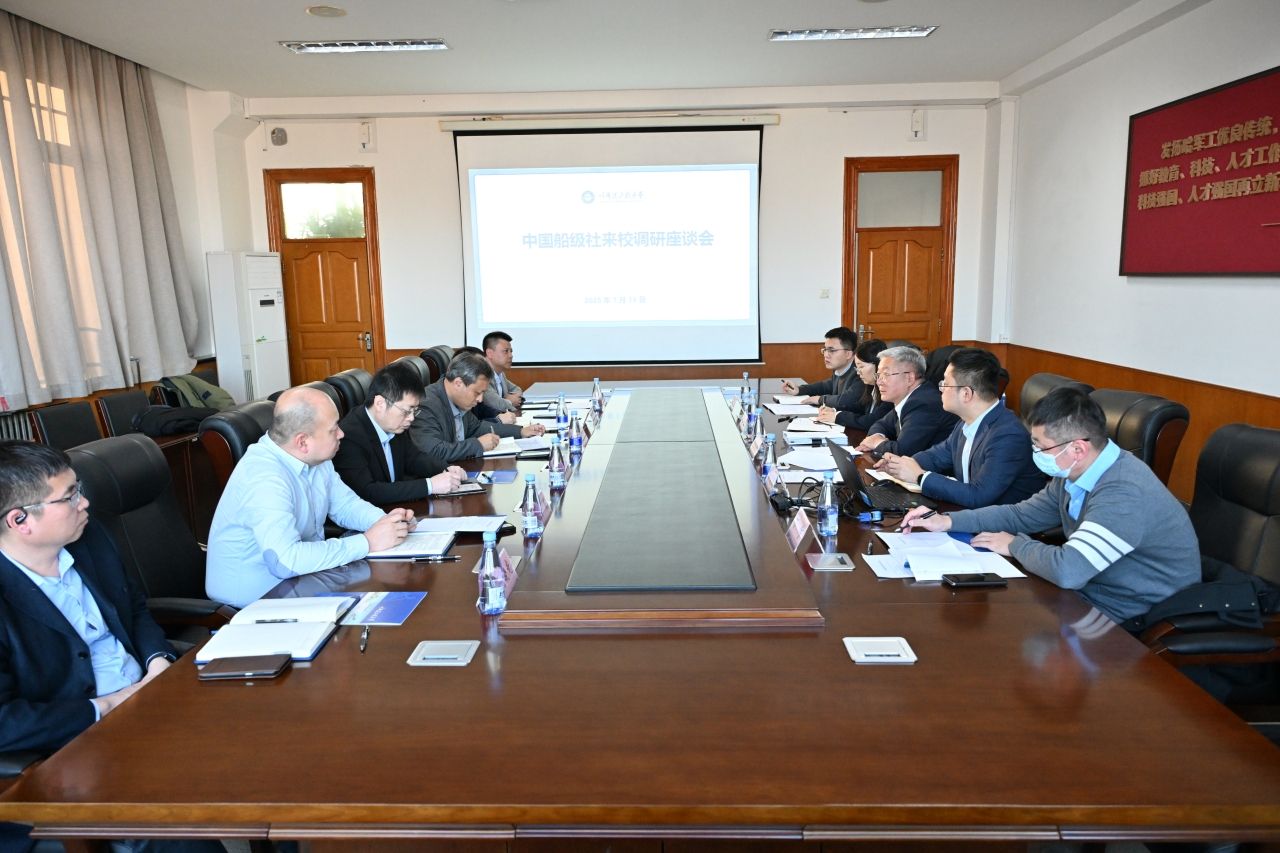
Recently, ZHANG Qingwen, Vice President of the China Classification Society (CCS), led a six-member delegation to Harbin Engineering University (HEU). The symposium was attended by HAN Duanfeng, Vice President of HEU; YUE Mengqiang, Deputy General Manager of CCS Dalian Branch; and LIU Peng, General Manager of CCS Harbin Branch.
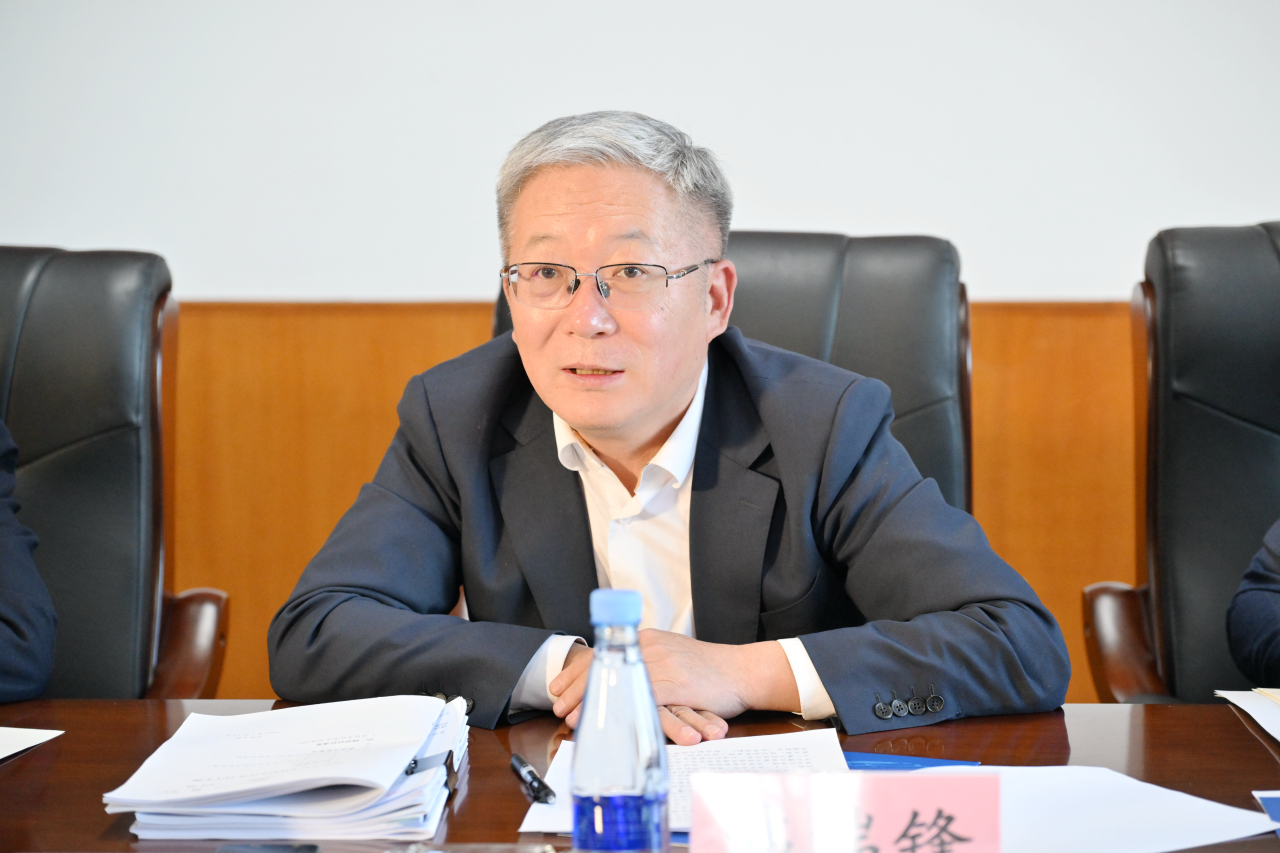
HAN Duanfeng expressed gratitude to CCS for its long-standing support and trust in the university. He highlighted HEU’s commitment to fostering research in the SMON field and its strong foundation in marine power, marine engineering equipment, and intelligent ships.
As a leading technical service organization in the maritime industry, CCS plays a crucial role in standard formulation, technical certification, and industrial leadership. The two institutions have a solid foundation for cooperation and broad prospects ahead. He expressed hope that this visit would serve as an opportunity to deepen collaboration, particularly in joint technical research, co-construction of innovation platforms, and talent cultivation, contributing to national development.
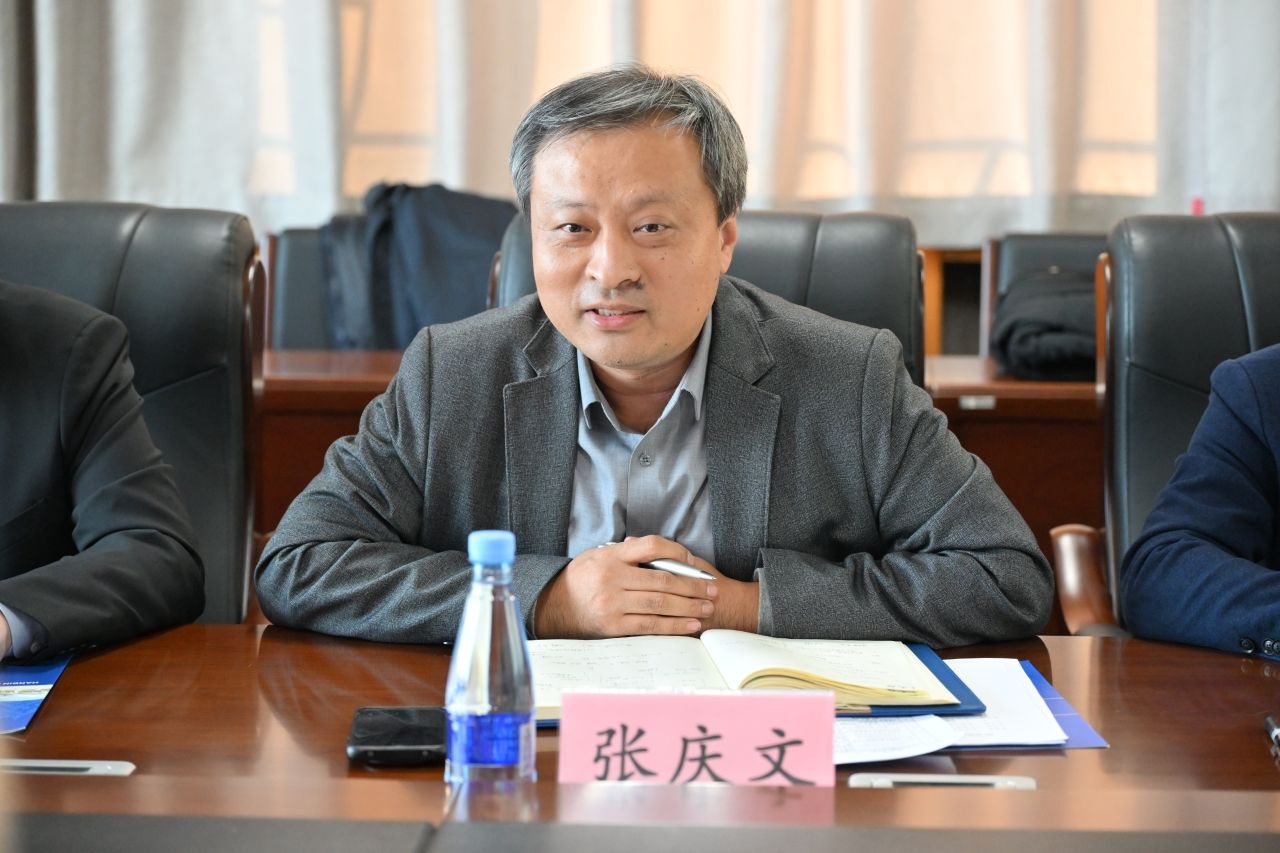
ZHANG Qingwen emphasized CCS’s key mission in ensuring ship safety and supporting industrial upgrades. With the shipbuilding industry shifting towards intelligence, sustainability, and high-end technologies, there is an urgent need for academic support and talent supply from universities. HEU’s academic strengths align closely with CCS’s development needs. He expressed hope that, guided by national strategic priorities, both sides would focus on critical areas such as R&D for new ship technologies, industry standard formulation, and interdisciplinary talent cultivation. He suggested establishing a regular communication mechanism to foster deeper integration of industry, university, and research efforts, accelerating the transformation of scientific innovation into industrial development and contributing to the high-quality growth of China’s shipbuilding sector.
Both parties engaged in in-depth discussions on key topics such as joint research on major projects and the alignment of graduate employment with talent development. They agreed to continue expanding cooperation, especially in cutting-edge areas like green and intelligent ships and marine engineering standard coordination, and to jointly promote the implementation of high-level scientific and technological achievements.