Recently, the “Xinghai” academic team of fluid mechanics from the College of Shipbuilding Engineering has made a major breakthrough. Their research paper, “Helical-rod-driven cylindrical triboelectric nanogenerator for efficient ultra-low-frequency, low-steepness ocean wave energy harvesting”, has been published in Nano Energy, a top international journal in the interdisciplinary field of nano energy and functional materials. The first author of the paper is MAO Erjie from the Collefe of Shipbuilding Engineering, with Associate Professor ZHANG Jie as the corresponding author.
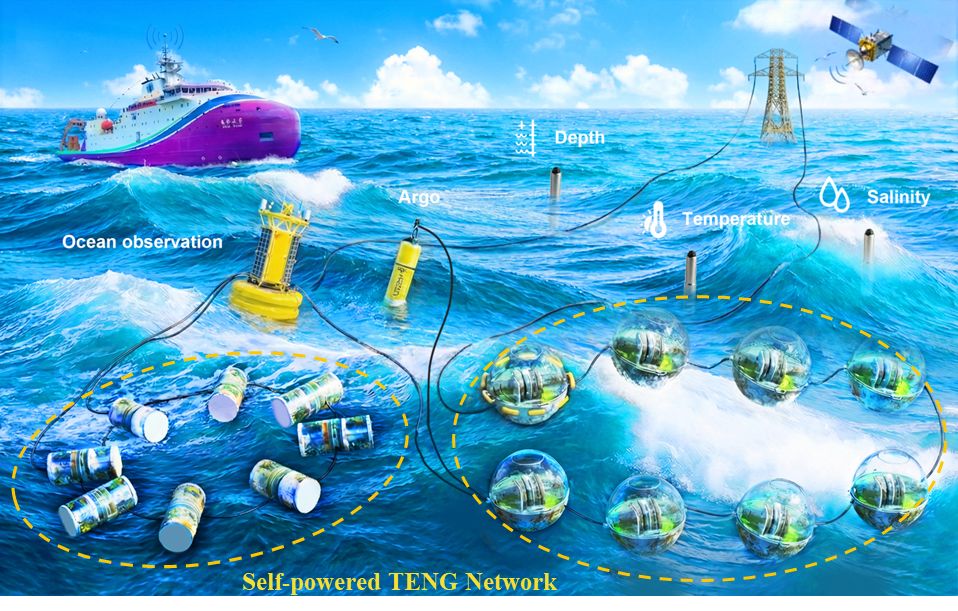
Inspired by the lift mechanism of bamboo copters, the team ingeniously designed a mechanical rectification mechanism featuring “helical rod + end-face ratchet one-way clutch”. Heavy balls at both ends of the device generate axial reciprocating motion with the rise and fall of ocean waves, which is converted into continuous unidirectional rotation through the helical rod. A single low-frequency excitation can sustain 12 seconds of continuous power generation, fundamentally solving the problems of difficult triggering, weak output, and discontinuous power generation under mild sea conditions.
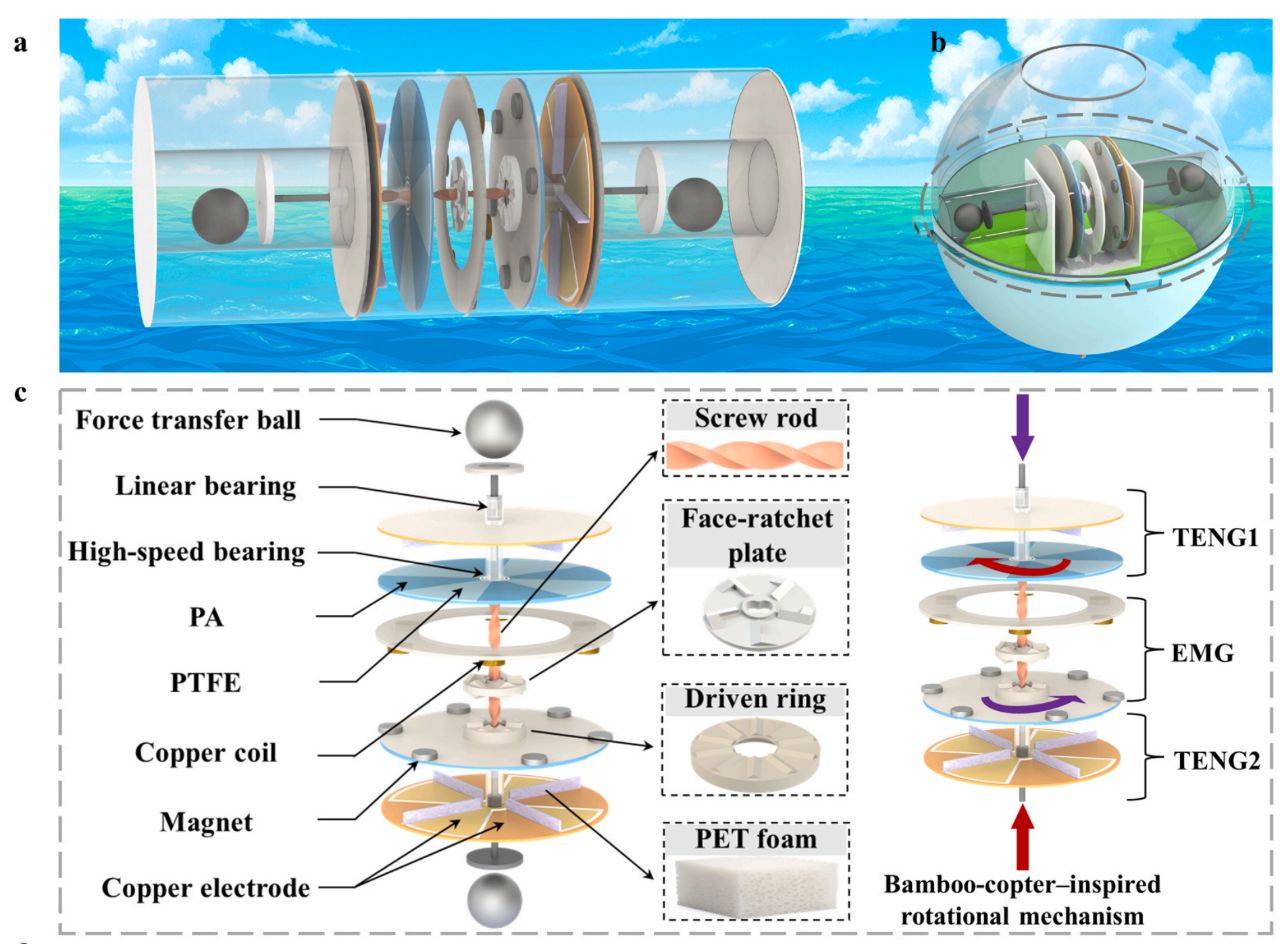
For the electrical design, the team adopted a ternary dielectric structure of PA, PTFE and porous PET foam paired with a copper electrode system. Leveraging the dual effect of porous PET foam as both a charge pump and a charge transfer medium, the power generation performance was improved by 50%. In real-sea tests conducted in Sanya Bay, the device successfully lit up 532 high-brightness LEDs and stably powered a temperature and humidity monitoring module.
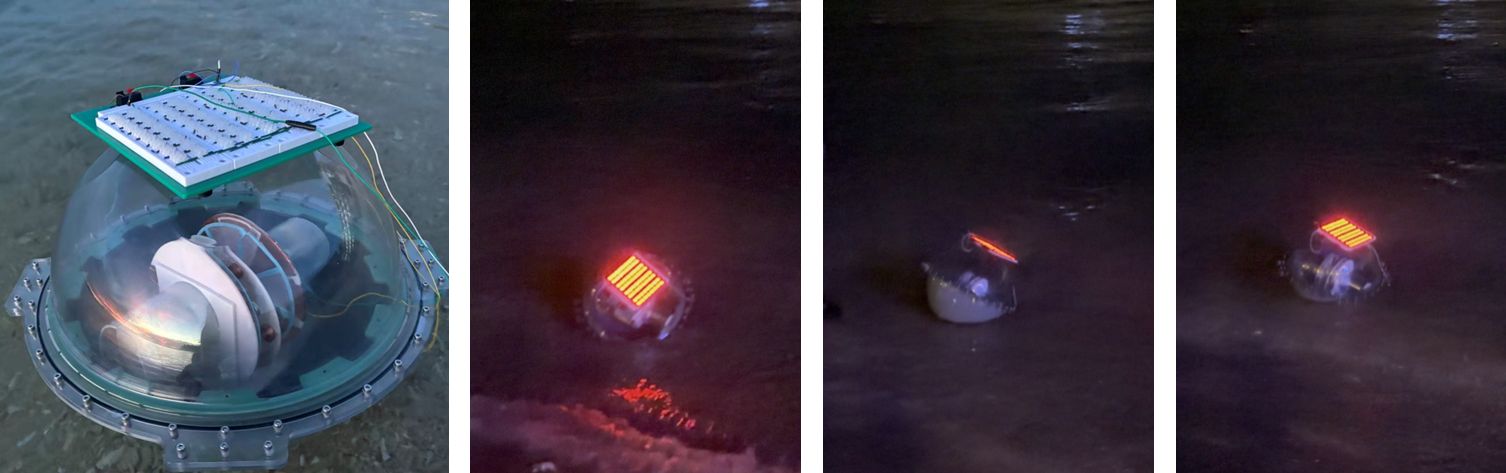
This research has formed a complete closed loop of “hydrodynamic simulation optimization – physical iteration in small-scale water tanks – real-sea test verification”, transforming the specialized water tank for ship performance testing into an open incubation platform for new marine equipment and greatly lowering the threshold for innovation verification.
Nano Energy is a top international journal in the interdisciplinary field of nano energy and functional materials. It has long focused on cutting-edge directions such as energy conversion, energy harvesting, self-powered systems, flexible electronics, nanogenerators and smart sensing, with an impact factor of 16.8.